Regrouping riders by lap time: a practical guide
Riders choose their own group at registration, and many choose wrong. Regrouping by lap time keeps sessions safer and more enjoyable. Here is how to do it without a spreadsheet.
Corsalo team · · 6 min read
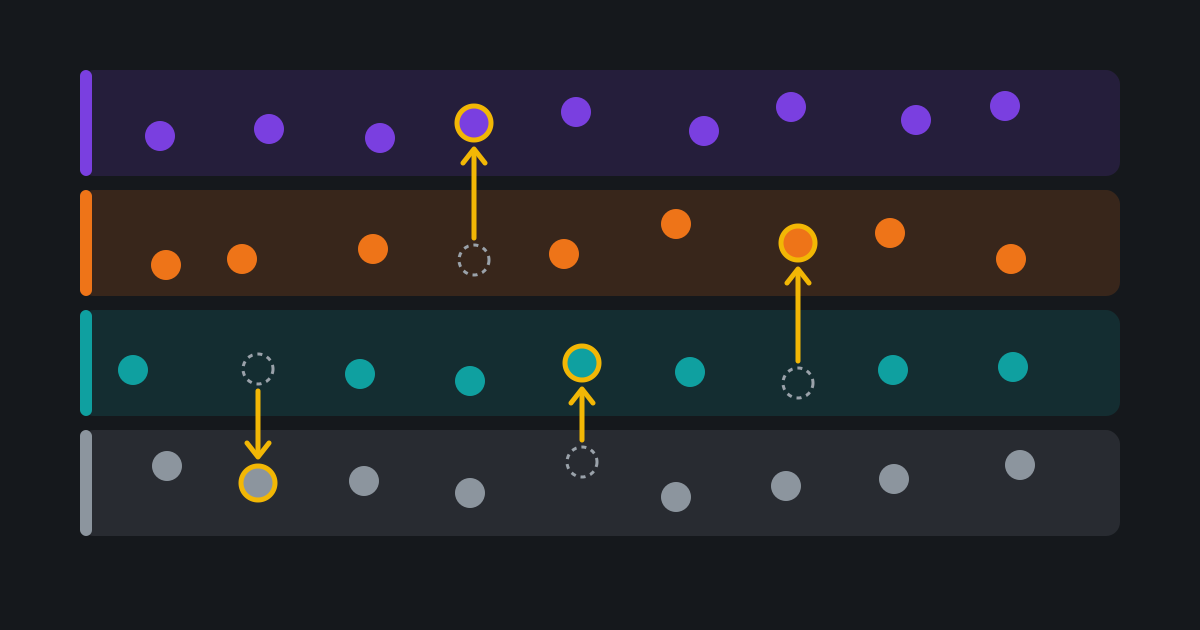
At registration, riders pick a group based on how fast they think they are. Some are modest, some are optimistic, and a few are simply wrong. After the first sessions you have real lap times, and the gap between the fastest and slowest rider in a group can be ten seconds or more.
That gap is a safety problem. Big speed differences mean more overtaking in corners and more nervous riders. Regrouping by lap time fixes it.
Pick one metric: best lap
There are many ways to rank riders, but best lap is the one riders understand and accept. Average lap time punishes riders who had traffic or a slow out-lap, and consistency scores are hard to explain at the desk.
Decide when to regroup
Regroup too early and you are working with out-laps and warm-up pace. Regroup too often and riders spend the day collecting new stickers. Most events regroup once or twice:
- After the second session, when everyone has a few clean laps.
- After lunch, if the morning sessions showed a lot of movement.
Respect group sizes
Each group has a capacity: the number of riders the track can safely hold, or simply the number of stickers you have. Fill groups from the fastest down, and stop at capacity, even if the next rider is only a tenth slower.
Some organizers prefer percentages (for example the fastest 15% in group A). That scales better when the number of riders changes from event to event.
What about riders without a time?
A rider who missed the first sessions has no lap time. The fair default is to leave them where they are. Moving them to the slowest group feels safe but often isn't, if the rider is actually fast.
Always review before publishing
The algorithm gives a draft. A person should look at it before riders see it. You know things the timing system doesn't: a rider who crashed and wants to take it easy, a coach riding with a student, a mechanical problem in session two.
Lock riders you want to keep in place, move anyone by hand, then publish.
Tell riders, and change the stickers
A new group only works if the rider knows about it and the sticker on the bike matches. Notify every rider who moved with their new group and where to get the sticker, and make sure the sticker desk checks the new group before handing one out.
Riders who ride in their old group after a change are the most common cause of wrong-group riding. Checking stickers at pit exit, or detecting it from the timing data, closes that gap.